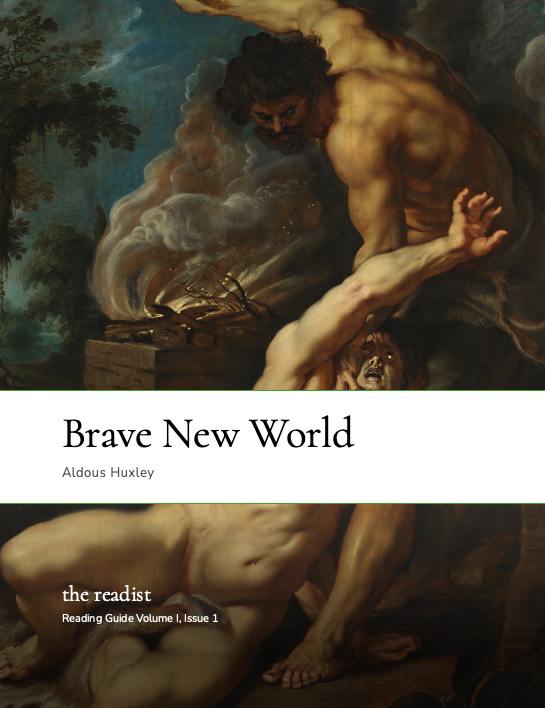
Brave New World
Your companion through Huxley's unsettling vision of a world engineered for comfort at the cost of freedom.
Aldous Huxley's Brave New World (1932) is a cornerstone of dystopian fiction and an eerily prescient critique of engineered pleasure, technocratic control, and the cost of comfort.
This guide is your companion through Huxley's unsettling vision. Inside: thematic explorations, discussion prompts, and a theoretical framework that invites you to read critically and collaboratively.
Theoretical Companion
"The Political Function of the Intellectual" by Michel Foucault
This text questions the standard role of intellectuals: not merely as observers but as active agents shaping power. It bridges theory and political practice—exactly what students of Brave New World need to interrogate authority and ideology.
Also Included in this Guide
- Historical and literary context
- Key themes and analysis
- Discussion and essay prompts
- Theoretical framework and discussion
This isn't about racing through bestsellers. It's about the kind of reading that changes how you see.
Want to go even deeper? Book a one-on-one tutoring session for personal guidance through the text.